

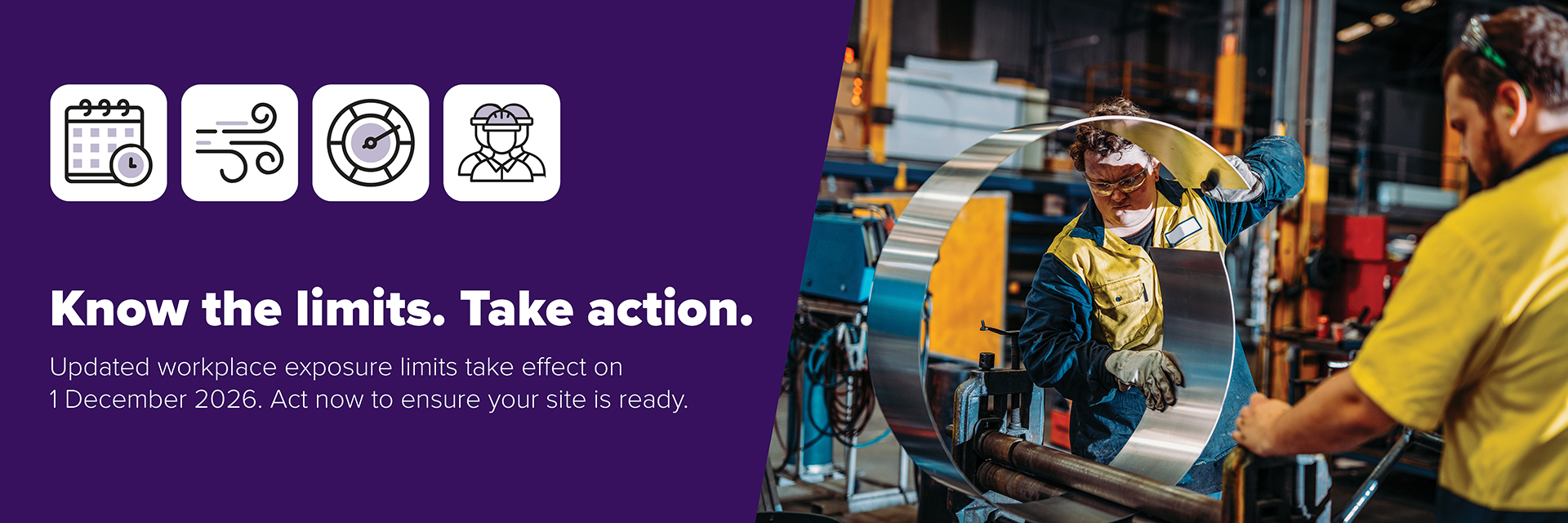
From 1 December, updated workplace exposure limits (WELs) for airborne contaminants such as dusts, chemicals and fumes will apply across Western Australia.
Manufacturing workers can be exposed to airborne contaminants during a wide range of production, maintenance and processing activities. Exposure can occur in many manufacturing workplaces, but some tasks present a higher risk.
You may be at greater risk when:
- cutting, grinding or machining metal, timber or other materials
- welding, soldering or brazing
- mixing, transferring or handling chemicals
- spray painting, coating or finishing products
- operating diesel- or petrol-powered equipment indoors
- cleaning, maintenance or production activities that generate dust
- working with solvents, adhesives, resins or coatings
- handling powders, raw materials or manufactured products
- working in enclosed or poorly ventilated areas.
Dust
Dust is a common airborne hazard in manufacturing. Workers may be exposed when:
- cutting, grinding or sanding materials
- handling raw materials, powders or ingredients
- loading, transferring or packaging products
- cleaning work areas or processing equipment
- maintaining plant and machinery.
Manufacturing dust may contain:
- metal particles
- wood dust
- silica-containing dust
- plastic or composite material particles
- other hazardous substances generated during production processes.
Chemical contaminants
Chemical contaminants can become airborne during many manufacturing processes. Workers may be exposed when:
- mixing, blending or transferring chemicals
- using solvents, adhesives, resins or coatings
- cleaning equipment or production lines
- spray painting or applying surface treatments
- handling products that release vapours or airborne particles.
These substances can be inhaled when they are mixed, sprayed, heated or otherwise disturbed.
Gases and fumes
Gases and fumes are another significant airborne hazard in manufacturing. Workers may be exposed when:
- welding, soldering or cutting metal
- operating fuel-powered equipment indoors
- heat treating or melting materials
- using products that release vapours during processing
- carrying out chemical manufacturing or treatment processes.
Without adequate ventilation, gases and fumes can build up quickly and create serious health and safety risks.
What employers need to do
Employers must:
- identify airborne hazards in the workplace
- review the substances, materials and processes used on site
- ensure plant, equipment and control measures are properly maintained
- review and update risk assessments where required
- ensure workers understand the updated WELs and how to use control measures such as local exhaust ventilation, extraction systems and respiratory protective equipment
- provide information, instruction and training in a language and format workers can understand.
Know the limits. Take action. Review your workplace now and make sure controls are in place to protect workers from airborne contaminants.
Resources and guidance
- How to identify airborne contaminant hazards in manufacturing: Information sheet
- How to identify airborne contaminant hazards in manufacturing: Case study
- How to identify airborne contaminant hazards in manufacturing: Checklist
- How to manage airborne contaminant risks in manufacturing: Information sheet
- How to manage airborne contaminant risks in manufacturing: Case study
- How to manage airborne contaminant risks in manufacturing: Checklist
We have developed airborne contaminants resources for employers, workers, health and safety representatives, work health and safety professionals, and small businesses to support the transition.